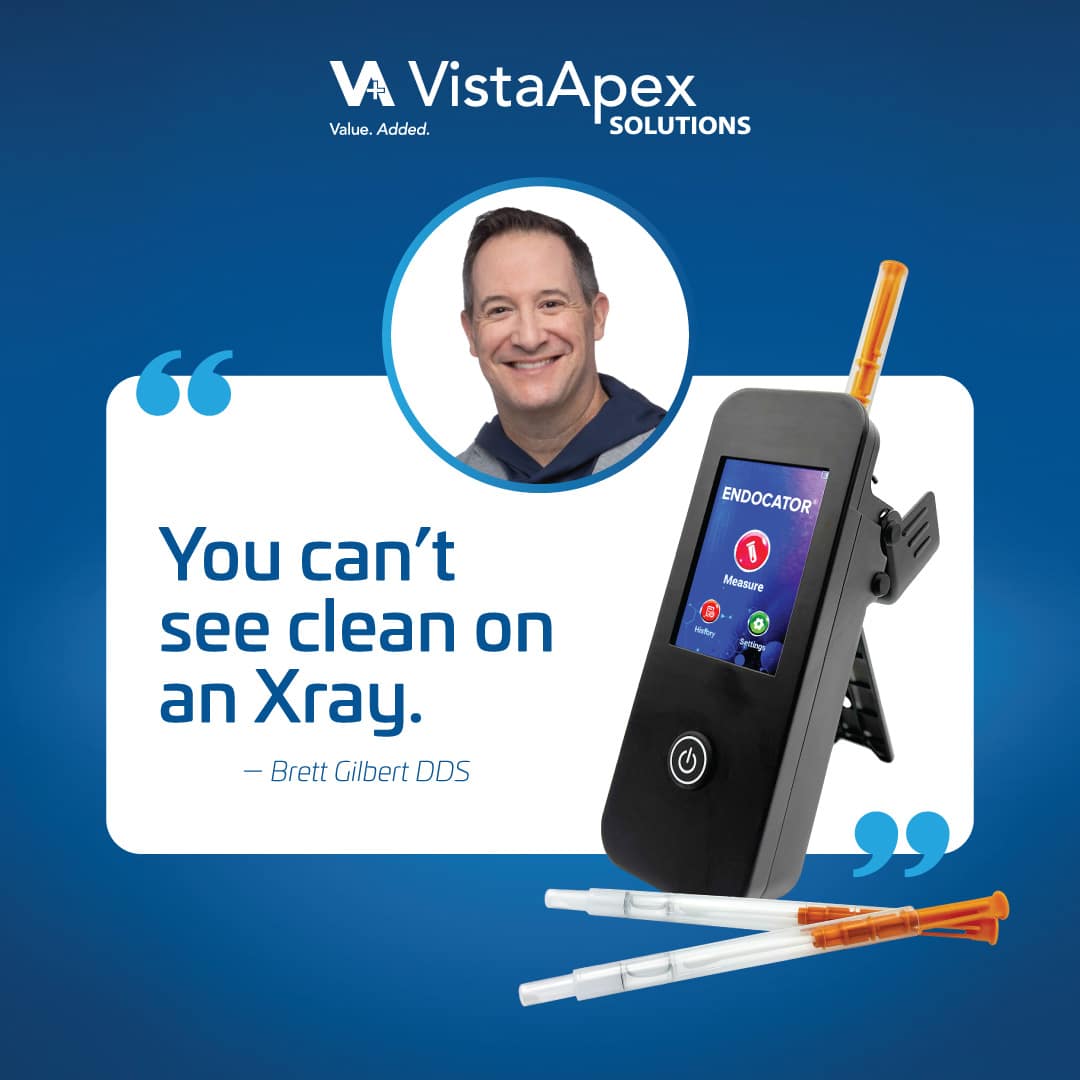
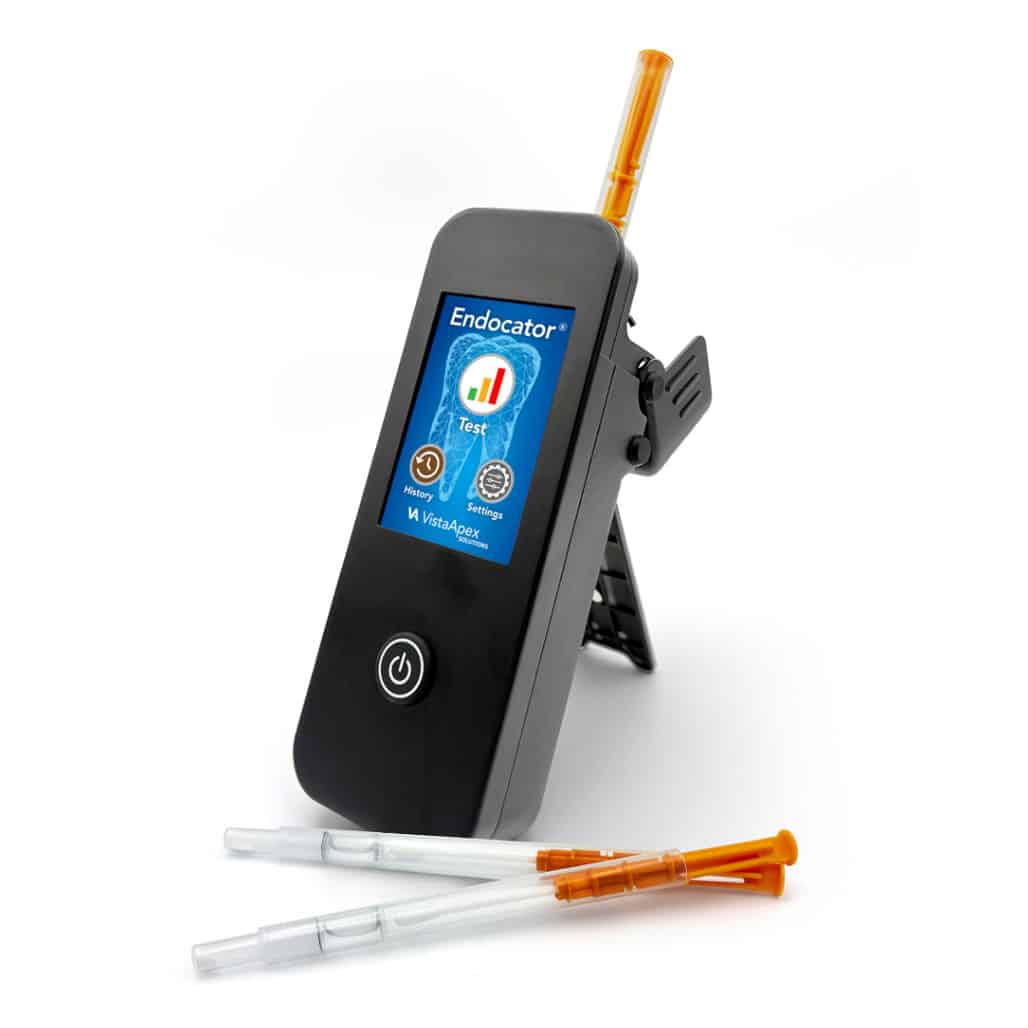
Endocator® is the first and only chairside device that detects residual contamination invisible to microscopes and radiographs, delivering an adjunctive canal score in 10 seconds.* 1, 2, 3
Know if the root canal is clean
Residual debris is known to contribute to root canal failure. The Endocator® is able to detect trace amounts of root canal contamination from bacteria, nerve tissue, blood, saliva, and apical fluid.
The 0 -100 Endoscore is based on a soon to be published 1000 patient study from the Sibar Institute of Dental Studies including feedback from practicing Endodontists.
How it works:
Endocator® detects cellular debris by measuring the amount of Adenosine Triphosphate (ATP) and other biomarkers present in the endodontic sample. ATP is present in all living cells and can be used to determine the amount of cellular debris within the canal.
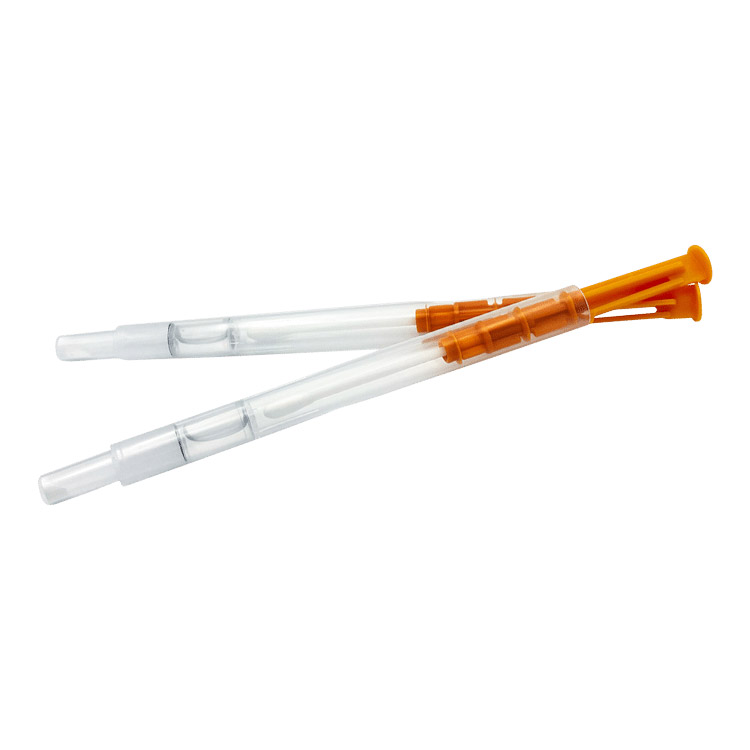
When the sample is added and mixed in the Endocator® Test Swab, the reaction to ATP creates bioluminescence that is detected by the Endocator®. High Endocators means that there are still high levels of debris (e.g. remanent bacteria and/or pulp tissue) in the sample and that additional cleaning is suggested to better debride the canal system.
Ease of use:
Simply rinse the root canal with 1 ml of sterile water and aspirate the water that remains in the canal. Inject the sample into the test swab and activate by fully inserting the swab and shaking. Insert the tester into the Endocator® device, the Endoscore will be displayed in 10 seconds.
With Endocator® now you can achieve:
- Rapid reliable assessment – Utilizes bioluminescence technology to detect residual contamination invisible to microscopes and radiographs, offering an objective, quantitative score of cleanliness
- Increased efficiency – Optimize your disinfection protocol with measurable verification of a thoroughly clean canal
- Improved confidence – Provides visible evidence of canal cleanliness, to reduce the likelihood of retreatments
View more information about Endocator® »
Journal Citations:
1. J Conserv Dent Endod. 2025 Feb;28(2):175-181.
2. J Conserv Dent Endod. 2024 Feb;27(2):111-112.
3. J Endod. 2015 Apr;41(4):447-50.
*Product images are for illustrative purposes only. The final product may vary based on model specifications and design updates.
Endocator®
MSRP Price: $1900.00
Our Customer Service Team can assist you in placing your order with your preferred dealer.
Call, chat, or email us today.
Frequently Asked Questions
Under laboratory conditions the chairside ATP testing can detect the presence of as few as 10 bacteria. In a root canal setting our test can detect ATP well before the presence of a single culturable bacteria. The Endocator® detects ATP from cultural bacteria, unculturable bacteria, nerve tissue, blood, saliva, and apical fluid so it is a much more complete evaluation tool of root canal cleanliness than simple bacterial culturing.
Yes, please visit this link to review all supporting research.
Expiration date is printed on the package. Once opened, the swabs must be used within 90 days and kept refrigerated.
Higher scores (51-100) mean that the root canal has lots of ATP present. This ATP could be from bacteria, nerve, tissue, blood, or saliva. Low scores (1-25) mean that the root canal is clean and has low levels of ATP. If you have high levels of ATP it is up to your best clinical judgement as to what do next, but additional rinses, activation, time, and possibly increasing the final file sizes are all possible strategies to bring down ATP levels.
The tooth can be tested anytime to check for ATP levels but at the very least it should be done after final irrigation before obturation or before sealing a tooth with calcium hydroxide in cases when second visit is necessary. The Endocator is also a great tool to validate and compare various treatment protocols (i.e. ultrasonics, laser, etc.).
Blood contamination inside of the root canal will give you high ATP readings. Apical bleeding should be controlled prior to ATP testing.
Product Literature
Testimonials